Have you ever wanted something so badly that you decided not to even try?
You wanted to apply for the job.
But what if they reject you?
You wanted to start the business.
But what if nobody buys anything?
You wanted to tell someone how you feel.
But what if they don’t feel the same?
You wanted to go back to school.
But what if you’re not smart enough?
You wanted to post your work.
But what if people laugh?
You wanted to finally chase the thing you’ve been thinking about for years.
And then your brain politely whispered:
“Maybe don’t.”
So you didn’t.
You called it being realistic.
You called it waiting for the right time.
You told yourself you needed more money, more experience, more confidence, more preparation.
But deep down, you knew the truth.
You weren’t waiting.
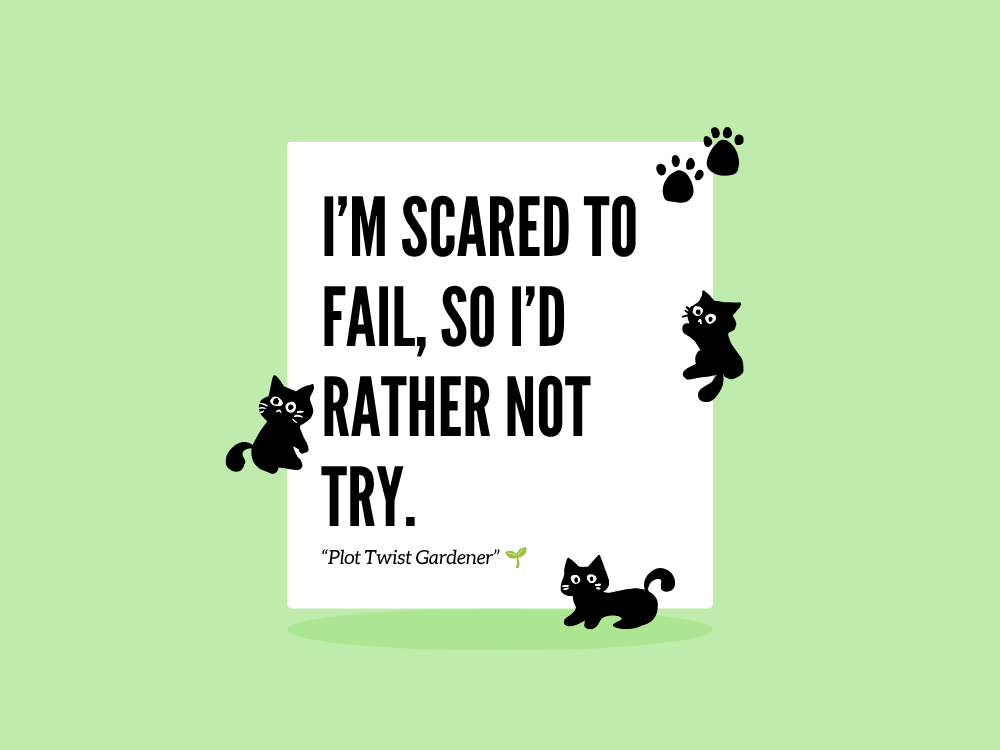
You were scared.
And that’s okay.
Being afraid of failure doesn’t make you weak.
It makes you human.
But there is a problem when fear becomes the reason you never find out what you’re capable of.
Sometimes Not Trying Feels Safer
Failure hurts.
There’s no point pretending it doesn’t.
You apply for the job and don’t get it.
That hurts.
You start something and it doesn’t work.
That hurts.
You ask someone out and they say no.
That definitely hurts.
You put your heart into something and people criticize it.
Ouch.
So your brain comes up with a clever little solution:
Don’t try.
If you don’t try, you can’t fail.
Brilliant.
Problem solved.
Except…
You also can’t succeed.
You can’t discover what could have happened.
You can’t learn.
You can’t grow.
And eventually, you might end up carrying a different kind of pain:
“What if I had just tried?”
And honestly, sometimes regret hurts more than failure.
The Comfort of Staying Where You Are
Not trying has an interesting advantage.
You get to protect your ego.
You can continue telling yourself:
“I could have done it if I really wanted to.”
“I’m actually capable. I just haven’t had the right opportunity.”
“Maybe I’ll do it next year.”
And because you’ve never tried, the dream remains perfect inside your head.
You haven’t failed.
You also haven’t succeeded.
You’re simply stuck in the land of potential.
And potential feels wonderful.
Because in your imagination, anything is possible.
The business is successful.
The book becomes a bestseller.
The relationship works.
The career takes off.
The dream comes true.
Reality, however, requires you to actually do something.
And reality is messy.
You might fail.
You might look stupid.
You might make mistakes.
You might discover you’re not as good as you thought.
But you might also discover something else:
You’re capable of becoming better.
Failure Doesn’t Mean You’re a Failure
This is where we get things mixed up.
You try something.
It doesn’t work.
Your brain says:
“I failed.”
And then somehow that becomes:
“I’m a failure.”
Those are not the same thing.
If you try to bake a cake and it comes out looking like a small edible disaster, you don’t conclude that you are fundamentally incapable of cooking.
You learn.
Maybe you used too much flour.
Maybe the oven temperature was wrong.
Maybe you should stop trusting that one recipe you found at 2 a.m.
You adjust.
Life works the same way.
A failed attempt is information.
It tells you something.
Maybe your strategy didn’t work.
Maybe your timing was wrong.
Maybe you need more skills.
Maybe you need help.
Maybe you need to try something different.
Failure is often feedback wearing an extremely unattractive outfit.
You Don’t Need Confidence Before You Start
One of the biggest lies we tell ourselves is:
“I’ll start when I feel confident.”
Okay.
How’s that going?
Because confidence usually doesn’t arrive first.
You don’t wake up one morning magically believing you’re capable of everything you’ve ever wanted.
Most of the time, confidence comes after you’ve done something difficult.
You try.
You survive.
You learn.
You try again.
You get a little better.
And your brain starts thinking:
“Wait… maybe I can actually do this.”
That’s confidence.
Not magic.
Evidence.
You build confidence by giving yourself proof that you can handle things.
What If You Embarrass Yourself?
Let’s talk about embarrassment.
Because sometimes failure isn’t even about the actual result.
We’re scared of what people will think.
“What if they laugh?”
“What if my friends think I’m ridiculous?”
“What if people judge me?”
Here’s something that might make you feel better:
People are usually too busy thinking about themselves to think about you for very long.
You make a mistake.
Someone notices.
Maybe they laugh.
Then they go back to worrying about their own problems.
Meanwhile, you’re lying in bed three years later replaying the moment like it’s a documentary.
You remember it.
They probably don’t.
And even if they do?
So what?
You are allowed to be a beginner.
You are allowed to be awkward.
You are allowed to not know what you’re doing.
Nobody starts as an expert.
Stop Making the First Attempt So Important
Maybe you’re scared because you’re treating your first attempt like it’s supposed to be perfect.
It isn’t.
Your first business doesn’t have to be your final business.
Your first video doesn’t have to go viral.
Your first job doesn’t have to be your dream job.
Your first workout doesn’t need to be impressive.
Your first article doesn’t need to be amazing.
Your first attempt has one main job:
To teach you what to do next.
That’s it.
Think of it as version 1.0.
You can improve version 2.
Then version 3.
Then version 4.
You don’t need to build the perfect thing.
You need to build something you can improve.
What Are You Actually Afraid Of?
This is a useful question.
Not:
“Why am I scared?”
But:
“What exactly am I afraid will happen?”
Maybe you’re afraid of losing money.
Okay.
How much?
Maybe you’re afraid people will judge you.
Who specifically?
Maybe you’re afraid you’ll discover you’re not good enough.
What would “good enough” actually mean?
Maybe you’re afraid you’ll waste your time.
What if trying teaches you something valuable even if it doesn’t work?
Fear becomes much easier to deal with when you give it a name.
Sometimes the monster is huge only because it’s hiding in the dark.
Turn the lights on.
Look at it.
Then decide what you can actually do about it.
Make the Risk Smaller
You don’t always need to take a massive leap.
Sometimes you just need to take a tiny step.
Don’t quit your job tomorrow to start a business.
Research the idea first.
Talk to people.
Build something small.
Test it.
Don’t write an entire book tonight.
Write one page.
Don’t completely change your life tomorrow.
Change one habit.
Don’t announce your five-year plan to the entire internet.
Take the first step quietly.
Small actions reduce fear because they make the unknown less unknown.
You don’t need courage for the entire journey.
You just need enough courage for the next step.
Ask Yourself a Different Question
Instead of asking:
“What if I fail?”
ask:
“What happens if I never try?”
This question hits differently.
What happens if you never apply?
You never know.
What happens if you never start?
Nothing changes.
What happens if you never tell them?
You’ll always wonder.
What happens if you never pursue the dream?
Someone else might.
And years from now, you may look back and realize that fear made more decisions for you than you did.
That’s a painful thought.
But it’s also useful.
Because you can change it.
Starting today.
You Are Going to Fail Sometimes
Let’s remove the fantasy.
You will fail.
At something.
Probably several things.
You’ll make bad decisions.
You’ll choose the wrong person sometimes.
You’ll take opportunities that don’t work out.
You’ll make embarrassing mistakes.
You’ll misjudge situations.
You’ll start things you eventually stop.
That’s part of being alive.
The goal isn’t to create a life where you never fail.
That’s impossible.
The goal is to become someone who can recover from failure.
That’s a much more powerful skill.
You don’t need to be fearless.
You need to become resilient.
Think About the People You Admire
Think about someone you admire.
An entrepreneur.
An athlete.
An artist.
A creator.
A leader.
Someone who built something impressive.
You probably see the success.
But success is usually the final chapter of a much longer story.
You don’t see every bad decision.
Every rejection.
Every awkward first attempt.
Every project that failed.
Every person who said no.
Every moment they wondered whether they should quit.
You see the result.
They lived the process.
And the process is where growth happens.
Give Yourself Permission to Be Bad at First
This might be the most freeing thing you can do.
Give yourself permission to be bad.
Seriously.
You don’t have to be good immediately.
If you’ve never worked out before, you’re allowed to be terrible at it.
If you’ve never written before, your first writing might be awkward.
If you’ve never spoken in public, you might shake.
If you’ve never started a business, you’ll make mistakes.
Congratulations.
You’re officially a beginner.
Beginners aren’t supposed to know everything.
They’re supposed to learn.
Don’t let the embarrassment of being new prevent you from becoming experienced.
One Day, You’ll Wish You Had Started Earlier
Maybe not tomorrow.
Maybe not next month.
But there may come a day when you look back and think:
“I wish I had started when I first thought about it.”
And here’s the thing.
You can’t go back to that version of yourself.
But you can start now.
You can make today the day your future self looks back on and says:
“Thank God I finally tried.”
You don’t have to guarantee success.
You just have to give yourself a chance.
Your Dream Doesn’t Need a Guarantee
We often want certainty before we act.
We want to know:
Will this work?
Will they say yes?
Will I make money?
Will people like it?
Will I succeed?
Unfortunately, life doesn’t come with that information.
Sometimes you have to move without knowing.
That’s what courage actually is.
Courage isn’t:
“I know this will work.”
Courage is:
“I don’t know if this will work, but I’m willing to find out.”
That’s a completely different mindset.
Start Before You’re Ready
Maybe you don’t feel ready.
Good.
You probably won’t.
Readiness is often something we use as an excuse because it sounds responsible.
“I’m just preparing.”
Sometimes you’re preparing.
Sometimes you’re hiding.
Learn to tell the difference.
At some point, research has to become action.
Planning has to become doing.
Thinking has to become trying.
Because you can’t think your way into experience.
You have to live it.
The Lesson
You’re allowed to be scared.
You’re allowed to doubt yourself.
You’re allowed to wonder whether you’re good enough.
But don’t let fear make every decision for you.
Because failure isn’t the worst thing that can happen.
Sometimes the worst thing is spending years protecting yourself from failure and realizing you also protected yourself from possibility.
You don’t need to know exactly how things will turn out.
You don’t need perfect confidence.
You don’t need everyone’s approval.
You just need to take the next step.
Apply for the job.
Make the first post.
Send the message.
Start the project.
Take the class.
Ask the question.
Try the thing.
And if it doesn’t work?
Learn.
Adjust.
Try again.
Because maybe you won’t succeed the first time.
Maybe you won’t succeed the fifth time.
But eventually, you might look back and realize something important:
You were never afraid of failure itself.
You were afraid of finding out what would happen if you actually tried.
So find out.
Because the life you want is probably on the other side of a few uncomfortable attempts.
And honestly?
You owe yourself at least one honest try.