There was probably no dramatic moment when it happened.
No giant argument.
No movie-style breakup.
No obvious sign that said:
WARNING: YOU ARE CURRENTLY DISAPPEARING INSIDE THIS RELATIONSHIP.
It probably happened quietly.
You stopped doing things because they didn’t like them.
Then you stopped seeing certain people because it caused arguments.
You started checking their mood before deciding what kind of mood you were allowed to have.
You changed the way you talked.
You became more careful.
More accommodating.
More understanding.
You started saying:
“It’s okay.”
even when it wasn’t.
“Whatever you want.”
even when you had an opinion.
“I don’t mind.”
even when you absolutely did.
And one day, you looked at yourself and thought:
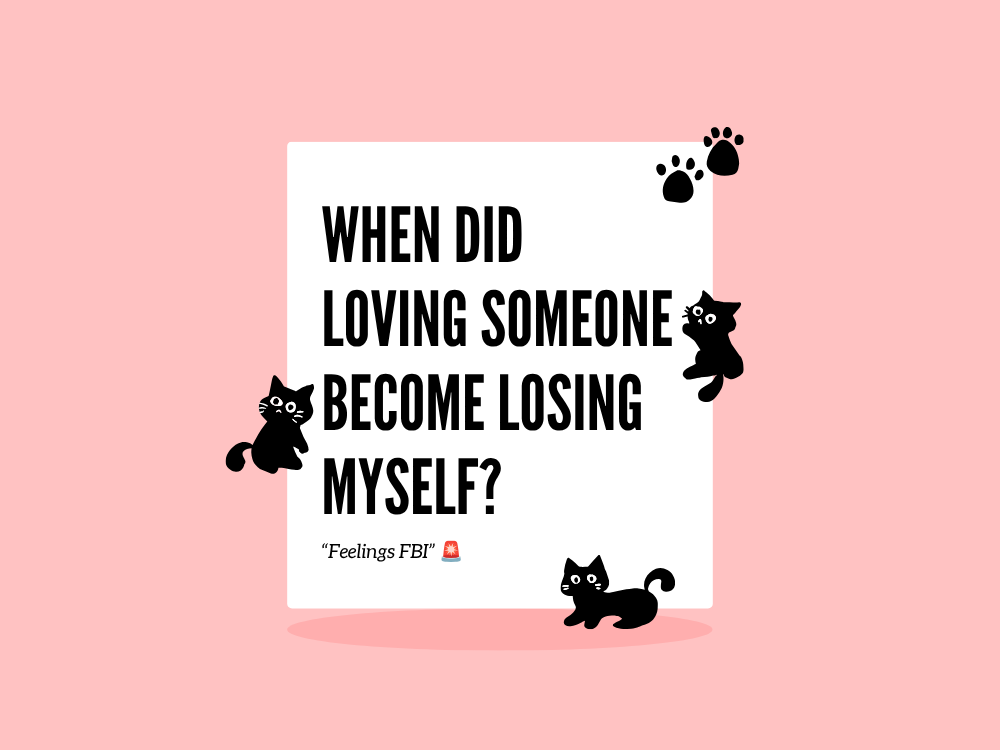
“When did loving this person become losing myself?”
That’s a painful question.
But sometimes, it’s the question that wakes you up.
Love Is Supposed to Add to Your Life
Being in love can change your life.
Of course it can.
You make room for another person.
You consider their feelings.
You make compromises.
You build routines together.
You dream about the future.
That’s normal.
Love requires adjustment.
But there’s an important difference between making room for someone and removing yourself to make room for them.
One says:
“You are important to me.”
The other says:
“You are more important than I am.”
Those are not the same thing.
Maybe You Started With the Little Things
It rarely begins with something huge.
Maybe you stopped wearing something because they didn’t like it.
No big deal.
Then you stopped hanging out with certain friends.
Still manageable.
Then you stopped going places without them because they might get upset.
Then you stopped talking about certain subjects.
Then you started avoiding things you enjoyed because you didn’t want another argument.
Little by little, your life got smaller.
And because each decision seemed small, you didn’t notice the overall pattern.
Until one day you realize:
“I don’t even know what I like anymore.”
You Started Managing Their Feelings
This is a big one.
You learned their moods.
You knew when they were annoyed.
You knew what topics would cause an argument.
You knew when to stay quiet.
You knew when to apologize—even if you weren’t sure what you’d done.
You became an emotional weather forecast.
“They’re quiet today. Better be careful.”
“They’re irritated. Maybe I’ll wait before bringing this up.”
“They’re upset. I guess I’ll cancel my plans.”
Eventually, their emotions became your responsibility.
And yours became secondary.
But here’s the truth:
You are responsible for how you treat someone.
You are not responsible for managing their every emotion.
You shouldn’t have to constantly rearrange yourself to keep another person from being upset.
You Confused Peace With Silence
Sometimes we say:
“We don’t really fight.”
And it sounds like a healthy relationship.
But ask yourself:
“Do we actually communicate, or have I just learned to stay quiet?”
There’s a huge difference.
Peace isn’t when one person never complains.
Peace is when both people feel safe enough to be honest.
If you’re staying silent because you’re afraid of what will happen if you speak, that’s not peace.
That’s fear wearing a very convincing costume.
You Became Too Understanding
Being understanding is a beautiful quality.
Until it becomes an excuse for someone else’s behavior.
You think:
“They’re stressed.”
“They had a difficult childhood.”
“They don’t know how to communicate.”
“They’re going through a lot.”
“They didn’t mean it.”
Maybe all of those things are true.
But understanding why someone behaves a certain way doesn’t mean you have to accept being hurt by it.
You can understand someone and still have boundaries.
You can have empathy without becoming their emotional punching bag.
You Started Calling Self-Abandonment “Compromise”
Compromise is healthy.
You choose the restaurant they like tonight.
They choose yours next time.
You adjust your schedule.
They adjust theirs.
You both give a little.
That’s compromise.
Self-abandonment is different.
You always change.
They rarely do.
You always apologize.
They rarely take responsibility.
You always sacrifice.
They expect it.
Eventually, you stop asking:
“What do we both need?”
and start asking:
“What do I need to do so they don’t get upset?”
That’s not compromise.
That’s disappearing.
You Stopped Asking What You Wanted
This can happen slowly.
At first, someone asks:
“What do you want to eat?”
You say:
“Anything is fine.”
Then:
“Where do you want to go?”
“Wherever you want.”
Then:
“What do you want to do this weekend?”
“I don’t care.”
Eventually, you stop having preferences.
Not because you don’t have them.
Because you’ve become so used to prioritizing theirs that you’ve stopped checking in with your own.
So ask yourself:
What do I actually want?
Not what keeps the peace.
Not what makes them happy.
Not what causes the least conflict.
What do I want?
You may have to relearn the answer.
You Might Have Confused Being Needed With Being Loved
This one can be difficult.
Sometimes we feel valuable because someone needs us.
We solve their problems.
Support them.
Comfort them.
Pay for things.
Fix things.
Listen for hours.
We become indispensable.
And somewhere in our minds, we think:
“If they need me, they won’t leave me.”
But being needed isn’t the same as being loved.
You deserve someone who wants you around—not simply someone who benefits from having you around.
What Happened to the Person You Were Before?
Think about who you were before the relationship.
What did you enjoy?
Who were your friends?
What made you laugh?
What were your goals?
What did you want to learn?
Where did you want to go?
What kind of person were you trying to become?
You don’t have to go back to exactly who you were.
You’ve grown since then.
But maybe some parts of that person deserve to come back.
Maybe the friend who loved spontaneous adventures is still inside you.
Maybe the person who loved painting, gaming, reading, traveling, dancing, writing, exercising, or simply spending time alone is still there.
They weren’t erased.
They’ve just been quiet.
Loving Someone Doesn’t Require Becoming Them
You don’t have to share every hobby.
You don’t need identical opinions.
You don’t need the same personality.
You don’t need to spend every waking moment together.
Healthy relationships have two whole people.
Not one person slowly absorbing the other.
You can say:
“I love you, and I don’t agree with you.”
You can say:
“I want to do this, even though you don’t.”
You can say:
“I need some time alone.”
You can say:
“That’s important to you, but it’s not important to me.”
And still love each other.
Difference isn’t automatically disconnection.
Sometimes difference is what keeps two people interesting.
Start Taking Small Pieces of Yourself Back
If you’ve realized you’ve been losing yourself, don’t panic.
You don’t have to suddenly reinvent your entire life.
Start small.
Go somewhere you enjoy.
Call an old friend.
Pick up a hobby.
Spend an afternoon alone.
Wear something you like.
Make a decision without asking for permission.
Write down your goals.
Listen to music you love.
Do something simply because you enjoy it.
At first, it might feel strange.
You might even feel guilty.
That’s okay.
You’re learning that taking care of yourself isn’t selfish.
Learn to Say “I Want”
Try replacing:
“Whatever you want.”
with:
“I’d rather do this.”
Instead of:
“I don’t care.”
say:
“Actually, I do have a preference.”
Instead of:
“It’s fine.”
say:
“That doesn’t really work for me.”
You don’t have to become aggressive.
You just have to become visible again.
Your opinions deserve a place in the relationship.
Boundaries Aren’t Threats
Some people are afraid that setting boundaries will push their partner away.
But a boundary isn’t:
“You have to do what I want.”
It’s:
“This is what I’m willing to accept, and this is what I’ll do if that boundary is crossed.”
For example:
“I’m willing to discuss this, but I’m not willing to be insulted.”
That’s not controlling.
That’s self-respect.
And if someone only loves you when you have no boundaries, that’s something worth paying attention to.
What If They Don’t Like the New You?
This is where things get real.
What happens when you start saying no?
What happens when you start expressing opinions?
What happens when you spend time with your friends?
What happens when you stop automatically apologizing?
What happens when you start protecting your peace?
A healthy partner may need time to adjust.
But they should ultimately want you to be healthy, confident, and yourself.
If someone becomes angry simply because you’re no longer willing to disappear for their comfort, that’s important information.
Sometimes your growth doesn’t ruin the relationship.
It reveals the relationship.
You Can Love Someone Without Losing Yourself
This is the balance.
You can care deeply.
You can compromise.
You can make sacrifices.
You can prioritize your relationship.
You can build a life together.
But you also need a life that belongs to you.
Your own thoughts.
Your own friendships.
Your own identity.
Your own dreams.
Your own boundaries.
Your own relationship with yourself.
Because if the relationship ever ends, you shouldn’t have to look in the mirror and wonder:
“Who am I without them?”
You should be able to say:
“I’m still me.”
Heartbroken, maybe.
Changed, definitely.
But still you.
Sometimes the Relationship Needs to Change
If you recognize yourself in this article, don’t immediately assume the answer is leaving.
Sometimes the relationship can be repaired.
Sometimes both people are willing to communicate differently.
Sometimes boundaries can be rebuilt.
Sometimes couples can rediscover who they are individually and together.
But both people have to participate.
You can’t rebuild a healthy relationship alone.
If one person keeps saying:
“This hurts me.”
and the other keeps saying:
“That’s just how I am.”
nothing changes.
Love requires willingness.
And Sometimes You Have to Choose Yourself
There are relationships where compromise is possible.
And there are relationships where you’re being asked to abandon yourself completely.
Those are different.
If you’re constantly afraid.
If your boundaries are repeatedly ignored.
If you’re isolated from people you love.
If you’re being controlled.
If you’re constantly made to feel worthless.
If you can’t express yourself without fear of punishment or retaliation…
then this isn’t simply a question of “growing together.”
Your safety and well-being matter.
Love is not supposed to require you to become smaller so someone else can feel bigger.
The Lesson
When did loving someone become losing yourself?
Maybe it happened one small compromise at a time.
Maybe you were afraid of losing them.
Maybe you thought being a good partner meant always putting them first.
Maybe you confused sacrifice with love.
Maybe you thought your needs were less important.
Whatever happened, don’t punish yourself for it.
You were probably trying to make the relationship work.
But making a relationship work should never require one person to disappear.
Love should give you somewhere to grow—not somewhere to hide.
You should be able to love someone and still have your own voice.
You should be able to care about their happiness without making it your entire responsibility.
You should be able to compromise without constantly surrendering.
You should be able to say no without fearing that you’ll be abandoned.
And you should be able to look at your life and recognize yourself in it.
So if you’re asking yourself:
“When did loving someone become losing myself?”
Maybe the next question isn’t:
“How do I love them less?”
Maybe it’s:
“How do I start loving myself again?”
Start small.
Say what you want.
Do what you enjoy.
Reconnect with your people.
Set a boundary.
Make a decision.
Take up space.
And remember who you were before you started measuring your worth by how happy someone else was with you.
Because the healthiest kind of love doesn’t ask:
“How much of yourself are you willing to give up for me?”
It asks:
“How can we build a life where both of us get to be fully ourselves?”
And that’s the kind of love worth growing into.