There is a very specific kind of happiness that comes with getting paid.
You check your bank account.
The number looks good.
For a brief, beautiful moment, you feel like you’ve finally figured life out.
You start making plans.
“This month, I’m going to save.”
“I’m going to stop spending so much.”
“I’m finally going to get my finances together.”
Maybe you even move some money around and feel extremely responsible for approximately twelve minutes.
Then reality begins.
The bills arrive.
You buy groceries.
You fill up the tank.
You order food because you’re tired.
You buy something online because it was “on sale.”
You go out with friends because you haven’t seen them in forever.
Then there’s that random purchase you don’t even remember making.
And suddenly, you’re opening your banking app again.
You stare at the balance.
You refresh the screen.
You close the app.
You open it again, just in case the number was wrong.
It wasn’t.
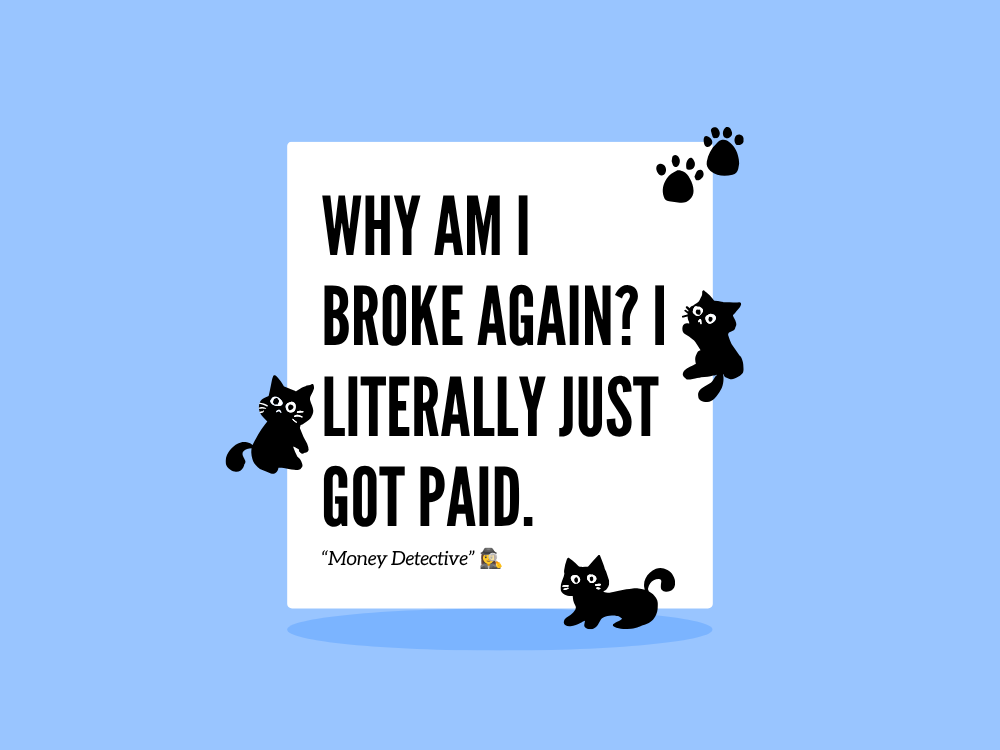
“Why am I broke again? I literally just got paid.”
If you’ve ever asked yourself this question, welcome to the club.
The good news?
You probably aren’t hopeless with money.
But you might have a few habits that are quietly eating your paycheck.
The Problem Isn’t Always One Big Purchase
When people think about overspending, they often imagine someone buying something ridiculously expensive.
A luxury car.
A designer bag.
An expensive vacation.
But that’s not how most people’s money disappears.
It happens quietly.
A coffee because you’re tired.
Food delivery because you don’t feel like cooking.
A little shopping because you’ve had a stressful week.
A night out because your friends invited you.
A subscription you forgot you were paying for.
A few convenience purchases because you were busy.
None of these feels like a financial disaster.
And that’s exactly why they’re dangerous.
One purchase doesn’t make you broke.
It’s the pattern that does.
The problem isn’t necessarily that you spent money.
It’s that you kept spending without noticing how quickly everything was adding up.
Payday Can Make You Feel Richer Than You Are
There’s something psychological about seeing a full paycheck sitting in your account.
Before payday, you’re careful.
You check prices.
You think twice.
You tell yourself:
“I’ll wait until I get paid.”
Then payday arrives.
Suddenly, that thing you’ve been wanting doesn’t seem so expensive anymore.
Your brain sees the bigger number and thinks:
We can afford it.
And technically, maybe you can.
But there’s something your brain conveniently forgets.
That money already has a job.
Rent.
Utilities.
Food.
Transportation.
Debt payments.
Savings.
Family responsibilities.
Future expenses.
Your paycheck isn’t necessarily money you can freely spend.
It’s money that hasn’t been assigned yet.
That’s an important difference.
“But I Deserve It.”
You probably do.
You work hard.
You’re tired.
You deal with stressful days.
You have responsibilities.
Of course you want to enjoy some of your money.
And you should.
Being financially responsible doesn’t mean turning your life into a punishment.
You don’t need to sit at home eating instant noodles while watching your savings account grow.
That’s not the point.
The problem starts when every emotion becomes a reason to spend.
Bad day?
“I deserve a treat.”
Good day?
“Let’s celebrate.”
Boring day?
“I’ll just buy something.”
Stressful week?
“Retail therapy.”
Payday?
“Finally!”
Not payday?
“I’ll just use the card.”
Eventually, spending stops being a financial decision and starts becoming an emotional reflex.
And that’s when things get expensive.
Maybe You’re Not Spending Too Much. Maybe You’re Spending Without a Plan.
Here’s where budgeting gets a bad reputation.
People hear the word “budget” and imagine spreadsheets, complicated formulas, and a person sitting at the kitchen table refusing to buy a coffee because it wasn’t in cell B17.
It doesn’t have to be like that.
A budget is simply a plan for your money.
That’s it.
Instead of asking:
“Can I afford this?”
you’re asking:
“What is this money supposed to do?”
That’s a much better question.
Because if you don’t decide where your money goes, something else will decide for you.
Usually, that something is an impulse purchase.
The “Little Treat” Trap
Let’s talk about little treats.
Because honestly, life needs them.
You shouldn’t feel guilty for buying yourself something enjoyable.
But sometimes the little treat becomes a daily subscription to yourself.
Coffee because you had a long morning.
Lunch because you were too busy.
Dessert because you had a hard day.
Shopping because you were bored.
Dinner because it’s Friday.
Drinks because it’s Saturday.
And suddenly you’ve turned an occasional reward into part of your regular lifestyle.
The problem isn’t the treat.
The problem is when you stop noticing that you’re treating yourself every single day.
At that point, it’s not a treat anymore.
It’s an expense.
And your bank account doesn’t care how emotionally justified the purchase felt.
Then There’s Lifestyle Creep
This one gets a lot of people.
You get a raise.
Great.
You earn more.
Also great.
So naturally, you upgrade your lifestyle.
A slightly nicer apartment.
More expensive restaurants.
A newer phone.
More subscriptions.
More trips.
More convenience.
More everything.
And suddenly, you’re making more money than you were two years ago…
but somehow you’re still waiting for payday.
That’s lifestyle creep.
Your income increases.
Your spending increases right alongside it.
It’s like running on a treadmill and wondering why you’re not getting anywhere.
Making more money is useful.
But if every increase in income immediately becomes an increase in spending, you haven’t actually created more financial freedom.
You’ve just created a more expensive version of your old life.
But Sometimes You Actually Don’t Make Enough
Let’s be fair.
Not every financial problem is caused by bad spending habits.
Sometimes you genuinely don’t earn enough.
If your income is barely enough to cover rent, food, transportation, bills, debt, and other basic responsibilities, then telling you to “just stop buying coffee” isn’t going to magically fix the situation.
You can’t budget your way out of mathematics.
Sometimes the answer really is increasing your income.
Learning a new skill.
Finding better opportunities.
Taking on additional work if that’s realistic for you.
Negotiating your salary.
Starting something on the side.
Or finding ways to reduce one of your biggest expenses.
But there’s an important difference between:
“I don’t earn enough to cover my necessities.”
and
“I earn enough, but I spend everything I make.”
Those are two completely different problems.
And knowing which one you’re dealing with is important.
Stop Comparing Your Wallet to Someone Else’s Instagram
Here’s another reason money disappears:
You keep looking at what everyone else has.
Someone buys a new phone.
Someone travels.
Someone eats at an expensive restaurant.
Someone gets a new car.
Someone is wearing something you’ve wanted.
And suddenly your own life feels less impressive.
You start thinking:
“Maybe I should have that too.”
But you have no idea what is happening behind the picture.
They might earn more.
They might be saving aggressively.
They might have family support.
They might be using credit.
They might be struggling financially behind the scenes.
You don’t know.
You’re comparing your bank account to a photograph.
That’s not a fair fight.
And you will always lose.
So How Do You Stop Starting Every Month From Zero?
You don’t need to completely change your personality.
You need a few systems.
Start by tracking your spending.
Not forever.
Just long enough to understand yourself.
For one month, write down everything you spend.
The boring stuff.
The fun stuff.
The embarrassing stuff.
The purchases you forgot about.
Don’t judge yourself.
You’re collecting information.
At the end of the month, look for patterns.
You might discover that you don’t actually have a huge spending problem.
You might have a convenience problem.
Or an emotional spending problem.
Or a food delivery problem.
Or a shopping problem.
Or maybe you simply underestimated how much everyday expenses cost.
Once you know the problem, you can actually work on it.
Save Before You Start Spending
If your strategy is:
“I’ll save whatever is left at the end of the month,”
there’s a good chance you’ll save nothing.
Because somehow, money always finds somewhere to go.
Instead, when you get paid, decide what you’re saving first.
It doesn’t have to be a huge amount.
The goal is to create the habit.
Treat savings like one of your regular obligations.
Pay yourself before your money disappears into everyone else’s hands.
Your future self will appreciate it.
Give Yourself Permission to Spend
This might sound strange coming from a money article.
But please don’t create a budget so strict that you hate your own life.
Give yourself money you are allowed to enjoy.
Call it fun money.
Call it guilt-free money.
Call it “I worked hard and I’m allowed to enjoy myself” money.
Whatever works.
The important part is that it’s planned.
If you’ve already decided how much you’re allowed to spend, you don’t have to feel guilty every time you buy something enjoyable.
You can spend it.
Enjoy it.
And move on.
That’s much healthier than trying to be perfect for two weeks, breaking your budget on the third week, and deciding that financial responsibility is impossible.
Try the 24-Hour Rule
For things you don’t actually need, don’t buy them immediately.
Wait.
Give it 24 hours.
If you still want it tomorrow and it fits your budget, go for it.
You might be surprised how often the desire disappears.
Because sometimes you don’t actually want the thing.
You want the feeling you thought the thing would give you.
Excitement.
Comfort.
Status.
Relief.
A distraction.
Once the emotion passes, the purchase doesn’t seem nearly as important.
Build a Small Emergency Fund
One unexpected expense can completely destroy a month when you have no savings.
A broken phone.
A medical bill.
A car problem.
A family emergency.
Something always happens eventually.
That’s why even a small emergency fund can make a huge difference.
You don’t need to build a massive amount overnight.
Start with a realistic target.
Then slowly increase it.
The goal isn’t just the money.
It’s the peace of mind that comes with knowing:
“If something goes wrong, I have something to fall back on.”
Don’t Make Your Money Habits About Shame
This is important.
If you’ve made bad financial decisions, beating yourself up won’t fix them.
Calling yourself irresponsible won’t create savings.
Feeling guilty won’t erase debt.
And telling yourself you’re “just bad with money” can become an excuse to stop trying.
Instead, think of money management as a skill.
Maybe nobody taught you.
Maybe you grew up around people who didn’t manage money well.
Maybe you’ve made mistakes.
Maybe you’ve spent years avoiding your bank account because looking at it made you anxious.
Fine.
You can start learning now.
You don’t have to be perfect.
You just need to become a little more intentional.
Think About Your Future Self
Here’s a simple way to look at money.
Every time you spend, you’re making a decision for either today-you or future-you.
Today-you wants the purchase.
Future-you wants security.
Today-you wants convenience.
Future-you wants savings.
Today-you wants the upgrade.
Future-you wants options.
Neither one is wrong.
You just need to make sure future-you gets something too.
Because one day, future-you becomes today-you.
And when that happens, you’ll be grateful for the choices you made when you had the chance.
You Don’t Need to Stop Enjoying Life
Money is supposed to be useful.
It should help you live.
Go out.
Travel.
Eat good food.
Buy something you love.
Help your family.
Enjoy your hobbies.
Celebrate important moments.
There’s nothing wrong with spending money on things that genuinely matter to you.
The goal isn’t:
“How little can I spend?”
The goal is:
“How can I spend in a way that actually supports the life I want?”
That’s a completely different mindset.
Because sometimes spending money makes perfect sense.
And sometimes spending money is just you being bored at 11 p.m. with your credit card.
Know the difference.
So… Why Are You Broke Again?
Maybe it’s because your money is disappearing into small purchases you barely notice.
Maybe you’re spending to cope with emotions.
Maybe your lifestyle has grown faster than your income.
Maybe you’re trying too hard to keep up with everyone else.
Maybe you don’t have a system.
Maybe you genuinely don’t earn enough.
Or maybe it’s a little bit of everything.
The important thing is to stop treating the problem like some mysterious curse.
Your money is going somewhere.
Find out where.
Then decide whether that’s where you actually want it to go.
You don’t need to become obsessed with every penny.
You don’t need to stop having fun.
You don’t need to become a financial expert.
You just need to stop letting your paycheck disappear on autopilot.
The Lesson
The goal isn’t to reach the end of every month with a huge amount of money sitting untouched in your account.
The goal is to reach the end of the month and know you made choices you won’t regret.
You paid what needed to be paid.
You saved something.
You enjoyed some of your money.
You made progress.
And you didn’t spend the entire month wondering where your paycheck went.
So the next time payday arrives, enjoy that feeling.
You worked for it.
But before you start spending, pause for a second.
Look at your paycheck and ask:
“What do I want this money to do for me?”
Because money isn’t just something you spend.
It’s a tool.
It can buy you food.
It can buy you experiences.
It can buy you convenience.
But if you manage it well, it can also buy you something even better:
peace of mind, freedom, and options.
And honestly?
Those are probably worth more than whatever you were about to add to your cart at midnight.
Your paycheck didn’t disappear overnight.
You just didn’t tell it where to go.
Now you can.